
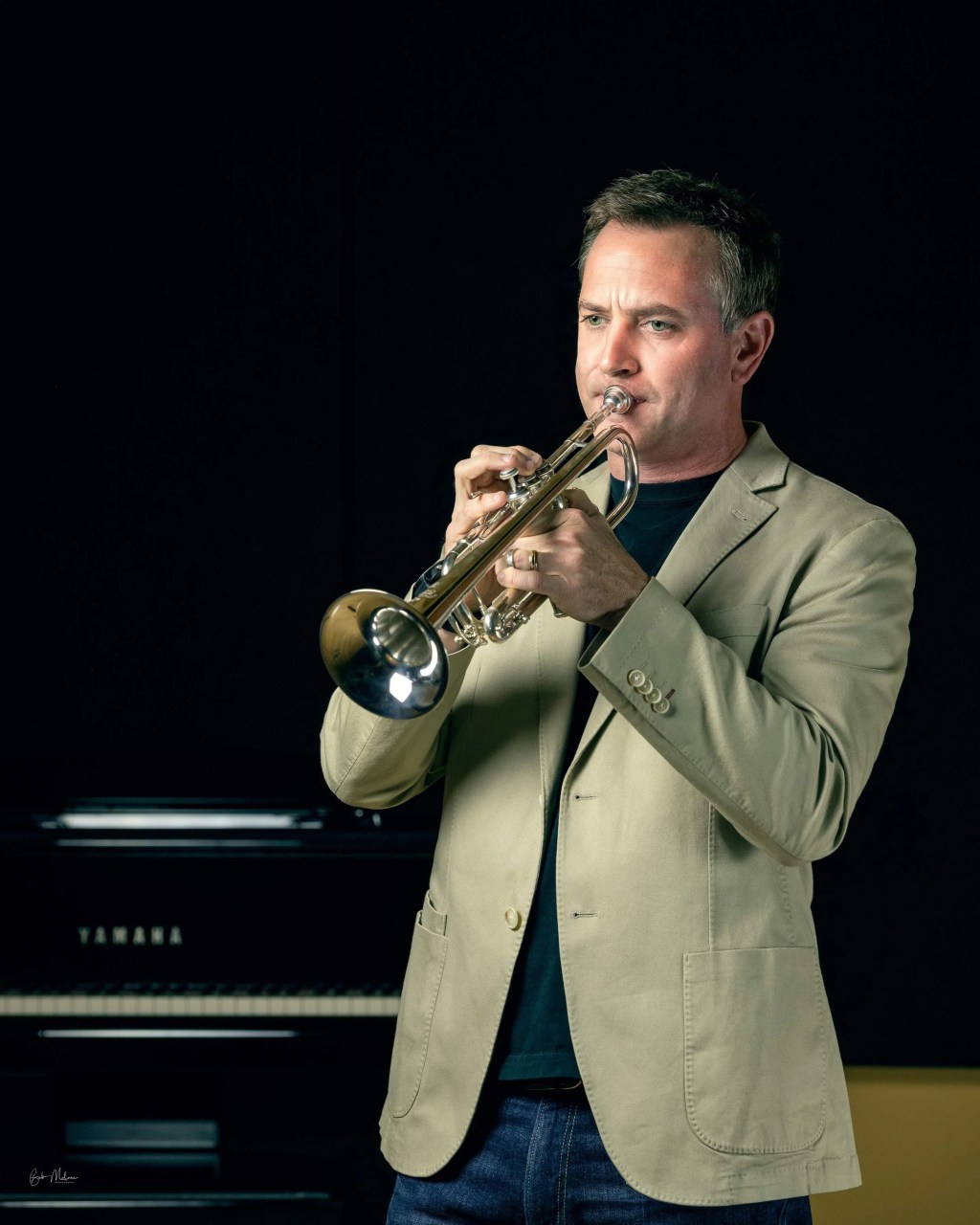
L.Park: Can you tell us your personal experience with intense practicing as a student and professional, and how it impacted you?
Christopher Still: Absolutely. I think about my time in the practice room when I was working long hours, intensely. Unfortunately, I was missing a critical element in these practice sessions… A goal!
I really had no way to measure if what I was doing was having an impact, due to my lack of plan. Thinking back on my time as a student, one thing I did have was time. As a professional with a family and a full-time fifty-two week orchestra job with the Los Angeles Philharmonic, I really miss that ressource. This has caused me to become ultra focused in the time I do have to prepare and I always set a specific goal while practicing.
L.Park: What do you think creates this pressure on young musicians to over-achieve?
Christopher Still: I think mental health and leaning how to deal with and balance stress is a tool musicians really need to take a closer look at. Especially during their education. Almost everyone I’ve ever worked with has graduated with a lack of mindset and a mild panic about their future. Of course one needs to be realistic about the odds of becoming gainfully employed as a musician, but there’s no need to stress out about it. Stressed out brains make bad decisions.
L.Park: Were there, in your conservatory or music school experience, a more damaging way to practice and why?
Christopher Still: I think if there’s one thing I would consider damaging, it would be that most Conservatory students don’t question the information that they are given.
In other words, they don’t see how the information provided by someone who already achieved that mastery applies to them particularly. Learning and development are not a one-size-fits-all experience: you need to have the ability to take information that works for you and understand what doesn’t and find balance.
Remember that the people who are teaching at colleges at one point in their lives didn’t understand how to do what you’re tying to lear either. They figured it out. There needs to be some balance between blindly accepting advice from our mentors and questioning how and if it applies to us personally.
L.Park: The ideal of artists fully devoting themselves to art (neglecting personal issues) is often represented as an ideal by the media. What are the long lasting impacts for you?
Christopher Still: This is such a great question. I was thinking of a few documentaries including Free Solo, Jiro Dreams of Sushi. Both of the main characters in these documentaries are impressive. They achieved a high level of mastery and proficiency and have created something that most people never get remotely close to.
However, they are two of the most unbalanced characters I’ve ever seen: in Jiro Dreams of Sushi, there is a father obsessing over perfection at this work, and therefore, comes home late at night. The next day, his children wake up and become alarmed seeing the “strange man sleeping on the couch”. To put it shortly, if your own kids don’t recognize you, then there is no balance, and your happiness and creativity will suffer.
L.Park: If there is one thing that music institutions should change, what would it be?
Christopher Still: This is a really big question and without context it’s hard to know how to answer, but I would say the most important thing I would like to see change in educational institutions is the cost. I think it is an abomination that a country like ours doesn’t provide free education. And a potential performing classical musician, trust me when I say you do not want to graduate saddled with student loan debt. So yeah, let’s change that.
L.Park: Failures while being a part of the process, are often seen as a reflection of our value as artists. Why do you think we regard it as such?
Christopher Still: I think most musicians attach too much of their self identity to the instrument that they play. How many times have you met someone out at party for example and said “Hi I’m Chris I play the trumpet”. It’s such an integrated part of our personalities that when we fail, we then assume that we personally have failed as a human and that couldn’t be more untrue.
So perhaps a good strategy here would be to recognize that you’re going to fail more than you succeed. The faster you can get used to that and grab a puzzle piece every time you fail, the faster you’ll get to see the whole picture. Then you can move on to another goal that’s a little bit harder and so on. When I started to be more intentional in my practice, I began to lower the bar and create goals that are were more reasonable, which led to me be kinder to myself.
It’s easy to become your worst critic in a field that values perfectionism. I often compare my self-talk to what would say to a friend and think: is that something I would say to someone I cared about? If it’s no, I certainly don’t want to speak to myself that way.
L.Park: Self-compassion is not often talked about, what advice would you give to young musicians to be kinder to themselves?
Christopher Still: I believe this question falls under the category of biting off more than we can chew most of the time. One of my practice strategies is to chunk everything down into smaller bits that are manageable, this way you can set a goal that is rather easy to achieve and celebrate a small victory.
Photo source: @honestpill Instagram





 The Musician Insight
Leave a comment