
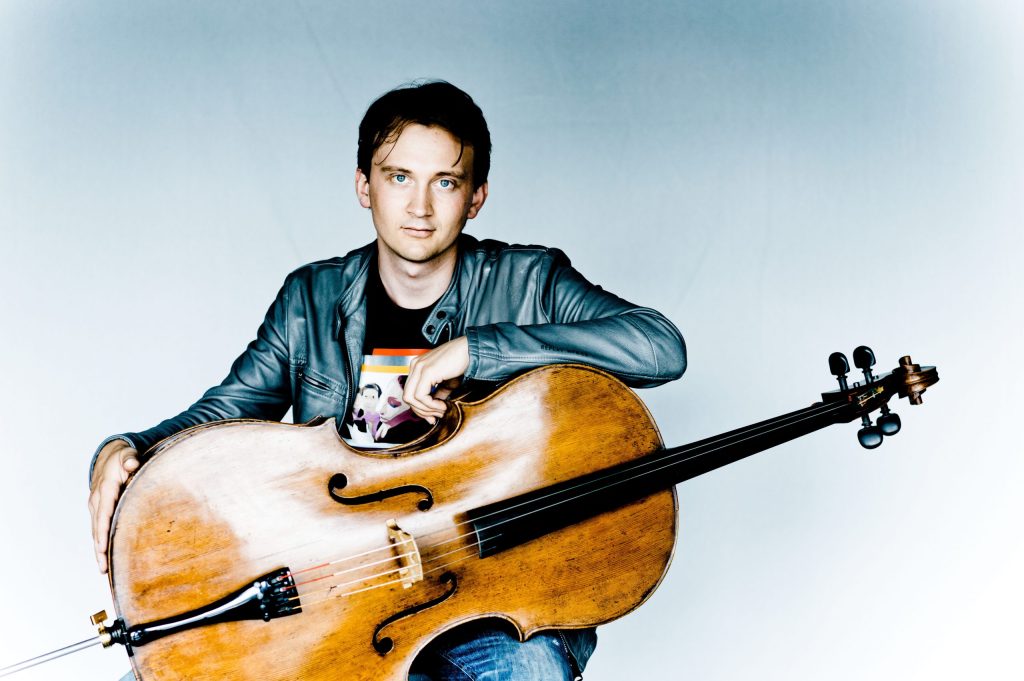
L.Park: In your latest album Fratres with Kai Schumacher, you perform Metamorphosis by Philip Glass. How did you approach this piece, originally written for solo piano, on the cello?
Benedict Kloeckner: When approaching Metamorphosis by Philip Glass for cello, my primary focus was to maintain the hypnotic and repetitive qualities inherent in the piece, while exploring the broader range of expressive possibilities that the cello provides.
Collaborating with Kai, we worked to ensure that the adaptation honored the original composition yet offered a fresh perspective through the unique voice of the cello.
L.Park: A Line was composed by Kai Schumacher, your partner on this album. Could you share some insights into your rehearsal process?
B.Kloeckner: A Line by Kai Schumacher invited a very collaborative rehearsal process. Given that Kai is both the composer and my musical partner, this allowed for open communication and experimentation.
We spent a lot of time exploring various interpretations and sound effects , discussing as well the emotional landscape of the piece. A very interesting sound effect is an identical “A” (a theme) that can be played on 3 different strings , but all in a different color.
This gives also the title to the piece.
L.Park: Throughout your career, you performed works from various repertoires (classical, baroque, contemporary). How do you adapt your technique?
B.Kloeckner: It is always an exciting journey adapting the technique to the musical needs of each style.
Whether if it’s the deep emotional intensity for romantic pieces, or the often complex and unconventional techniques in contemporary works, I focus on understanding the stylistic demands and historical context of each piece to inform my interpretation.
However most important for me is always to capture the emotional and structural essence of a piece and to make it “alive”.
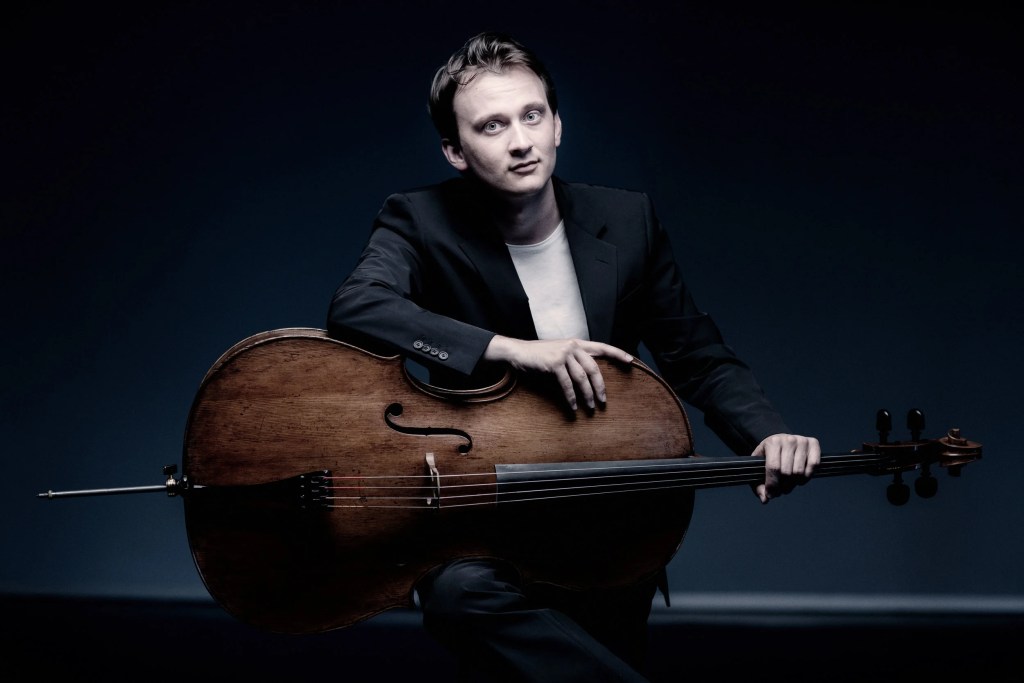
L.Park: You’ve performed with several conductors, such as Daniel Barenboim and Simon Rattle. What is the piece of advice that has impacted you the most?
B.Kloeckner: To believe in daily practice as a way of not just maintaining skill but as a lifelong journey of discovery and the importance of staying humble and always seeking to learn.
L.Park: How do you approach a piece differently when performing solo versus with an ensemble?
B.Kloeckner: When performing solo, I delve deeply into my personal connection with the piece, exploring every nuance and possibility in terms of expression and interpretation.
In an ensemble setting, I focus on balancing my interpretation with those of my fellow musicians, creating a dynamic interplay that serves the collective vision of the music.
L.Park: Bach is perhaps the first composer who comes to mind when we think of the cello. In your opinion, in what ways did he revolutionized this instrument?
B.Kloeckner: Bach revolutionized the cello by elevating its status from a mere continuo instrument to a solo one.
His compositions explore the cello’s range, voice, and possibilities in ways that were unprecedented at his time. The technical demands and expressive depth found in his six cello suites continue to challenge and inspire cellists today.
L.Park: Could you walk us through your interpretation process?
B.Kloeckner: My interpretation process begins with an in-depth exploration of the score. Understanding the structure, motifs, and emotional narrative of a piece forms the foundation.
From there, I experiment with different approaches to see how they align with my artistic vision.
L.Park: Since 2014, you’ve released thirteen albums. Has your recording process changed over the years?
B.Kloeckner: Over the years, my recording process has become more intuitive and fluid.
Experience has taught me to balance technical perfection with emotional authenticity during sessions. I’ve learned to trust the process more and embrace the spontaneity that can come with live recording scenarios.
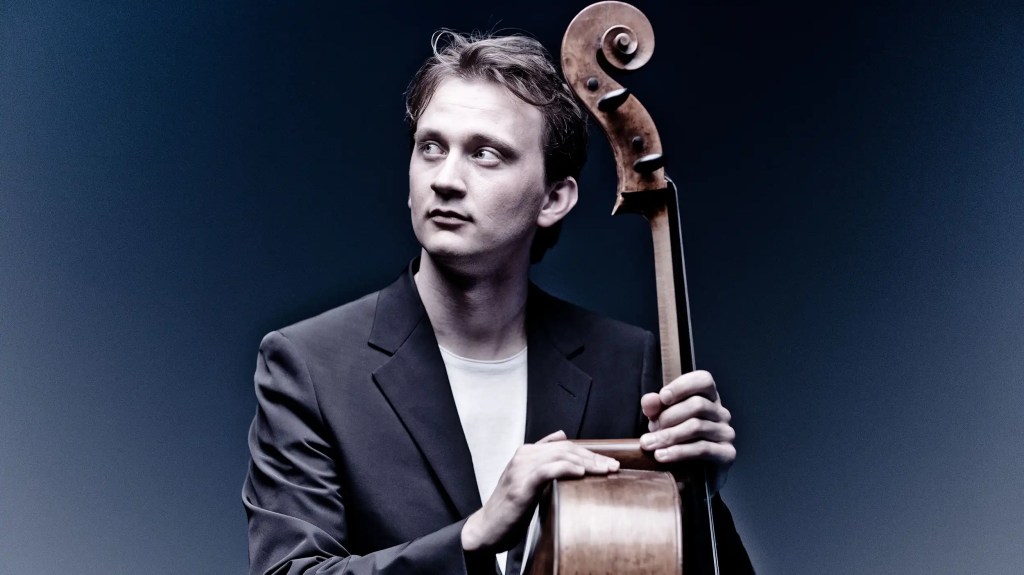
L.Park: Talking about albums, you’ve recorded one live with Alexandra Troussova and Kirill Troussov. How does the recording process differ when performing live versus in the studio?
B.Kloeckner: Recording live with Alexandra Troussova and Kirill Troussov brought an energy and immediacy to the performance that is often hard to capture in a studio.
The presence of an audience adds an extra layer of excitement and engagement, which can profoundly influence interpretive choices and heighten the overall performance.
L.Park: You are a fervent chamber music performer. Do you think you might create your own chamber orchestra?
B.Kloeckner: Creating my own chamber orchestra is an intriguing concept.
I have a strong passion for chamber music, and having a dedicated ensemble could offer a platform for exploring new repertoires, commissioning works, and developing a distinctive musical identity.
L.Park: Finally, is conducting something you might be interested in for the future?
B.Kloeckner: Conducting is definitely an area of interest for the future.
I find the prospect of leading an orchestra with all its repertoire and sound possibilities and shaping the overall interpretation of works very exciting!
First picture source: http://www.ecolenormalecortot.com




 The Musician Insight
Leave a comment