
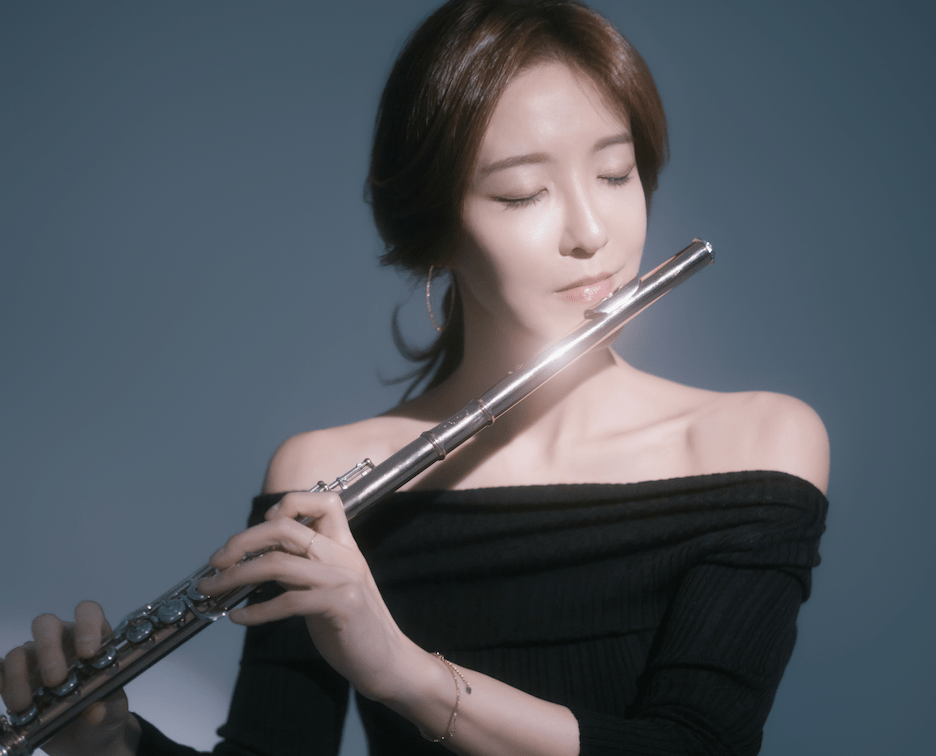
Luna Park: As a soloist, you are recognized for your impeccable technique. When you first start working on a piece, how do you make it personal from a technical point of view?
Jasmine Choi: For me, technique is never something separate from expression. When I begin learning a piece, I don’t think first about being technically brilliant but about what kind of sound, color, and physical feeling the music asks for.
I experiment early with breathing, articulation, and fingerings to find what feels most natural to my body and imagination. In that sense, technique is not just about being able to play all the notes- it is part of the musical vocabulary to express the character of the piece, certainly not about expressing myself personally.
L.Park: Which composer do you think best understood the flute, and in what way?
J.Choi: It feels unfair to single out just one composer. For me, the deepest understanding of the flute often comes from composers who were flutists themselves.
In earlier periods, the roles of performer and composer were closely connected, and that made an enormous difference in how the instrument was written for. Composers such as Johann Joachim Quantz, François Devienne, Theobald Boehm, Franz Doppler, Karl Doppler, Jules Demersseman, Paul Taffanel, Emil Prill, Marc-André Reichert, and Philippe Gaubert understood the flute from the inside out.
They were courageous enough to push the technical and expressive limits of the instrument and they could actually play their own music as well. Their flute writing makes their works both demanding and deeply rewarding to perform. We also have such incredible living composers/flutists like Gary Schocker, Robert Dick, Mathias Ziegler, Tilman Dehnhard and Ian Clarke, who pushed even further on the instrument’s traditional perceptions and boundaries.
L.Park: Throughout your career, you have interpreted a wide range of repertoires, including Baroque music. Would you be interested in recording an album using only period instruments?
J.Choi: Yes, absolutely. I find these historically informed performances endlessly fascinating, especially because it challenges many habits we take for granted on modern instruments.
These period instruments changes how you listen, phrase, and even breathe. Recently I got totally infatuated with music from renaissance and baroque periods- these wonderful music gave me many different perspectives as a musician.
I see my performing career a lifelong one, and in this sense I still have many more years to keep learning, improving and experimenting on unlimited aspects of flute playing, instruments and repertoire.
L.Park: As a musician, what do you seek to share when you perform?
J.Choi: I try to be as authentic as possible when I perform, because we performers are really just messengers of the composer.
I don’t want to deviate from the original message of the music, as our role is to deliver it honestly and clearly. However, how the listeners feel afterward is not up to us. Just as when we read the same book or watch the same movie, everyone comes away with different emotions and thoughts.
There is no right or wrong reaction: we are all free to feel whatever we feel. But in this sense, the act of sharing music on stage should have a purpose: to stir something in you, emotionally or intellectually.
L.Park: What is the most valuable lesson music has taught you about performance and technique?
J.Choi: The more I learn about music and the more I try to shape my musicianship and technique through the flute, the more humble I become.
Over time, music has made me a better person, not just a better performer. It constantly reminds me how much there is still to learn, and how small the ego needs to be in order for the music to speak. I have also learned to let go of the result while still doing my absolute best in the process.
You prepare, you practice, you commit fully, and then you release the outcome: that balance is very similar to life itself.
L.Park: You have released eleven albums. Which one has been the most memorable for you as a performer?
J.Choi: Each album reflects a different chapter of my life, and also a different playing style in my “flutistic” journey. It’s almost like looking at your old photos: it captures the moment, but in this case, with music.
When I listen to each album, it brings me back to the time I was in, and reminds me of the unique state of mind and what I was most focused on during that period. Unlike many other performers, for the better or for the worse, I find my own flute playing always evolving every year, instead of being fixed in one style that is already fixed and completed.
So, each recording shows each stage of my flute playing- and it gets me thinking, “I wouldn’t play like this now, but at that time of this recording I was in love with this kind of a playing style, and it is very honest, sincere and therefore extremely convincing as well”.
Now I look for my future recordings, and already excited to hear how the musical languages will evolve over time.
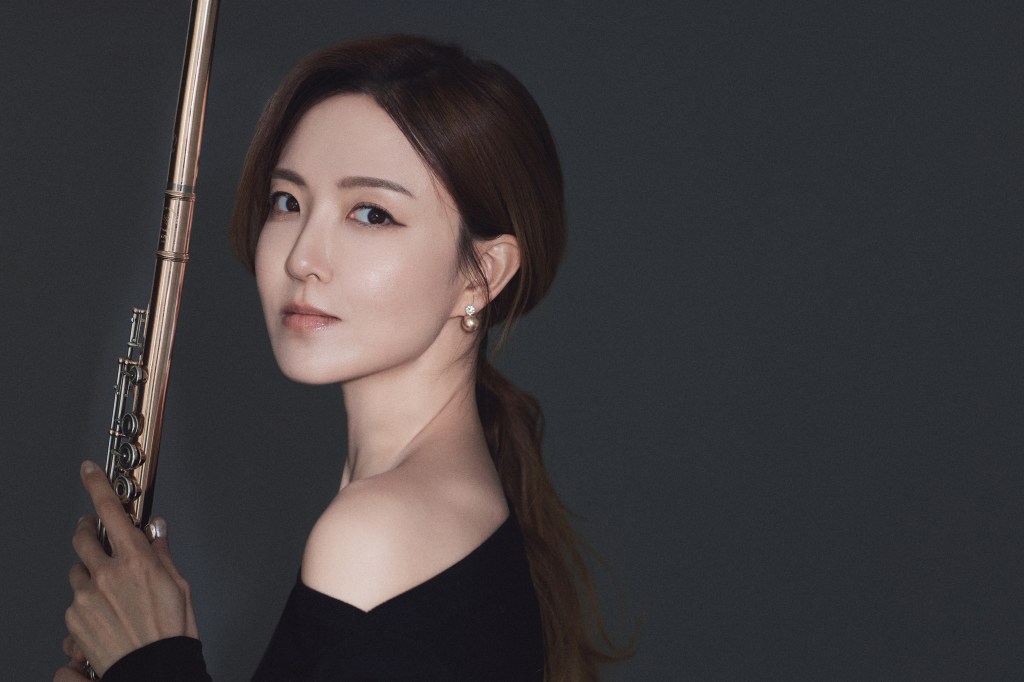
L.Park: The flute is part of a large instrumental family. Which member of the flute family do you find the most interesting to perform on?
J.Choi: I have to admit that I love recorders. It’s probably because it was the first wind instrument that I ever tried, and the reason I wanted to keep exploring further on other wind instruments as well.
Although I picked up the flute and continued on it professionally, recorders always have a special place in my heart. I love how the recorder’s sonority so warm and unforced, and it is totally fascinating how virtuosic this instrument can be, only with a mouthpiece and a few key holes, and no key involved at all.
For me it is a nature’s wonder. Other than recorder, alto flute fascinates me. Its darker, warmer sound invites a different sense of time and phrasing. It has got so much depth and such charming shades of colors than a concert flute. Performing on it feels almost like stepping into another voice: one that speaks more quietly but for sure more intimately.
L.Park: Part of being a musician involves performing the same pieces repeatedly. How do you keep your interpretations fresh?
J.Choi: Staying curious and attentive is the key rather than having a pressure of coming up with a “new” interpretation.
Every hall, every audience is different, and how I feel on that day, and the whole atmosphere in that moment changes the piece slightly. It can never be the same, and I am thankful for that aspect otherwise music will be static and boring.
Instead of aiming to reproduce something, I listen closely to what is happening in the moment. Freshness often comes from attention, not from reinvention.
L.Park: Many musicians approach their craft from either a spiritual or a more practical perspective. How would you describe your own view of music?
J.Choi: I see music as both spiritual and practical ; but practical not in the sense of exchanging any financial value, but in the sense that music can genuinely help people.
As musicians, we can offer moments of peace, comfort, and connection,
especially in difficult times like this. For me, music is sacred. It has been everything in my life and, in many ways, my closest companion as I moved from Korea to the United States and then to Austria, navigating different cultures, languages, and lifestyles.
I don’t play music simply to make a living: for me music is essential to who I am, a vocation.
As I get older, however, I see my role more and more as a service to the community. Music may not literally save lives, but it can certainly lift a spirit, make someone’s day, or perhaps even save a soul. That is where its spiritual and practical power meet.
L.Park: Finally, is there a piece or a repertoire that you haven’t had the opportunity to perform yet but would particularly like to explore?
J.Choi: I am an extremely curious musician, and one of the great joys of my life is knowing that I will never run out of things to explore.
I am endlessly interested in music, its history, the flute repertoire across all eras, and the evolution of the instrument itself. Under the wide umbrella of the flute, I have gone through passionate phases of collaboration — with jazz musicians, Korean traditional musicians, K, pop singers, Broadway artists, and Baroque specialists — and the
possibilities continue to feel limitless.
At the moment, I am especially fascinated by period instruments. A recent visit to a musical instrument museum deeply inspired me, where I had the rare opportunity to try historical flutes from around the world, as well as the crystal flute owned by Napoleon Bonaparte, early flutes developed by Theobald Boehm, Wilhelm Ritterhausen, Louis Lot, and Baroque instruments from the 17th century.
Encounters like these remind me how much there still is to discover, and how we are all closely connected to each other. Rather than a single piece or repertoire, it is this ongoing journey of curiosity that excites me most. And it continues to shape the
direction of my artistic life, with many chapters still waiting to be written.
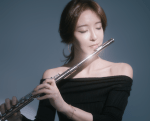
First picture © Studio1207-2



 The Musician Insight
Leave a comment