
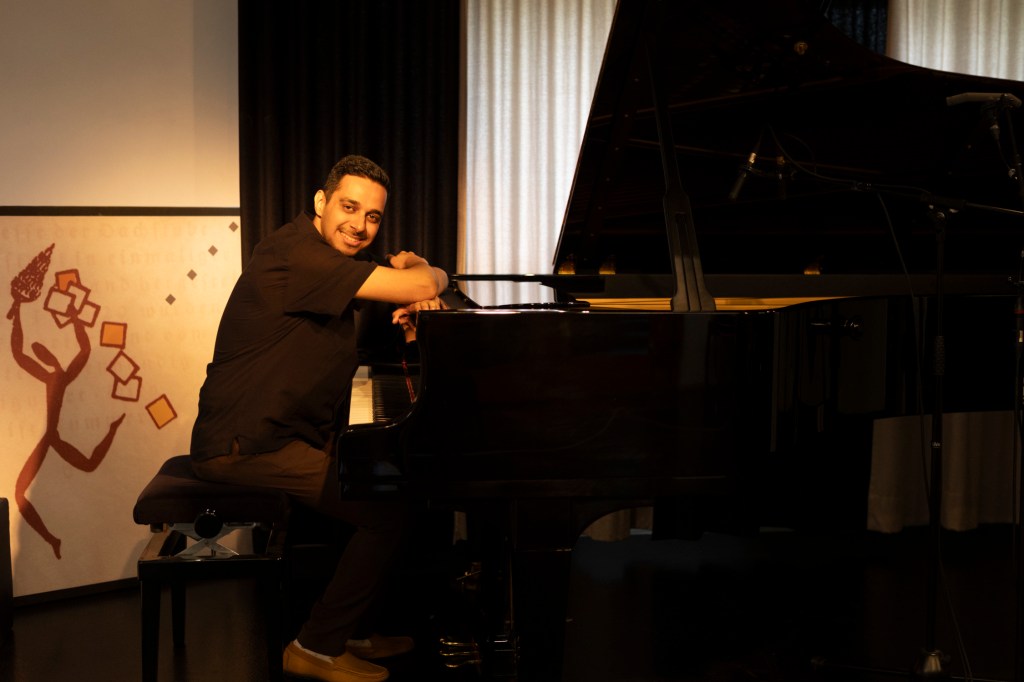
Luna Park: Your last album, Time Travel, explores repetitive music, instrumental jazz, and traditional music. How did you decide on choosing the sound you wanted to create for this album?
Rahul Wadhwani: I’ve been wishing to form a piano trio for a long time, and I really wanted to write some pieces for it.
Gino, our drummer, has this incredible fusion base and keyboard sound, so I always thought unconsciously about that sound while composing. And if you listen to the album, you can actually hear his influence, blended with a contemporary European style that I often work with.
For the first track Song for Zakir Hussain, I was seeking someone to perform the tabla recitals. Gino asked Fazal Quereshi, who’s Zakir Hussain’s brother, and he came into the studio and nailed his part in ten minutes. For the violin part, that comes to accentuate the main melody, Apoorva Krishna was really sweet and agreed to play on the track.
L.Park: What was your composition process like? Was everything improvised with the other musicians? Or did you write some material prior to recording?
R.Wadhwani: Most of the material was composed before recording, except of course, the improvised sections.
Before going to the studio, we played a few gigs just to see how it feels. I remember, we played a beautiful venue in Mumbai, Prithvi Theatre. And after the show, I was pretty convinced that it was going to work. In two weeks, it was done and we started rehearsing.
L.Park: There are many metric changes, especially in the title track, Time Travel.
How did you and the other musicians manage to stay on track during the recording progress?
R.Wadhwani: All the songs were recorded on Click, except Song for Zakir Hussain.
So we had this annoying thing in our head, which again we were contemplating “Should we do it or not?”. But we were thinking it’s easy to sometimes edit stuff, you know, that way. So on Click, it was quite easier. And in India, the understand of rhythm is crucial: because in our music, the subdivisions are very different.
One great example is Trilok Gurtu, legendary percussionist that is based in Germany: I had the privilege to play a couple of concerts with him. This experience helped me to learn a lot about being present on stage and the kind of preparation that goes behind it.
L.Park: Which musical piece came to you first for this opus?
R.Wadhwani: Actually, there are two songs from the album which are part of my solo piano album as well.
One is Dot in a Circle and other is Melody of the River, which I recorded last year in Austria. I chose those two because I thought it would be interesting to play it as a trio. But the first tune that I specifically wrote for my last album is Time Travel I think.
And the overall process comes from this habit of putting small ideas in my phone, when they came to me. So when I was in the process of making this opus, I was like “Now is the time to see what I’ve been doing”. If we take again Time Travel, that came from a rhythmic idea first.
L.Park: When you perform this album live, do you change certain parts of the songs or do you play them as they are?
R.Wadhwani: I just start playing an intro and take it from here. Mostly melodies and everything else are pretty fixed, but I do want some freshness in the music. Then throughout the song, during the solos, you can obviously express yourself as you wish during that moment.
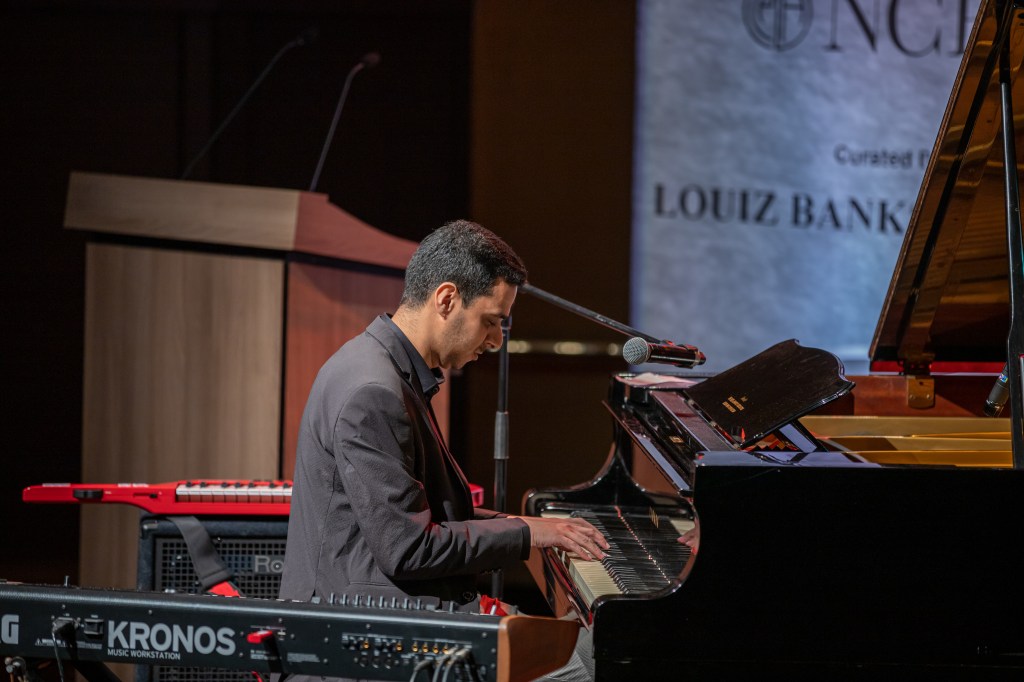
L.Park: How do you challenge yourself to create something new? Do you compare your work with your previous projects? Or do you set that aside and focus on what you’re currently seeking?
R.Wadhwani: That’s such a beautiful question. I’m always trying to find new stuff, because I’m very scared of falling in the trap of writing similar things.
And a lot of times I feel like my music is predominantly melody driven. But because I know my composition tendencies, I try to shift my writing. Obviously this is just my third album, but I always try to push myself. And another thing is I’m very lucky that I play with a bunch of different artists in a different style.
So you’re also like taking that music in and then eventually when you write it. But my goal at least is to push and come up with new things as much as I can.
L.Park: Which piece turned out to be the most unexpected in terms of composition?
R.Wadhwani: Morning After War came out pretty strong, but it wasn’t my favorite song of the album due to its melody and harmony: it’s pretty straightforward.
So I was like: “Is it worth to put in the album?” because it’s not as sophisticated, but of course, it had its place.
L.Park: When performing live, what do you hope to convey to your audience?
R.Wadhwani: I hope first, for my audience, to convey that everything is music and we should not classify music genres.
And if in those ninety minutes, people enjoyed listening to our performance, then it’s a win for me. Because a lot of times people come without knowing what they are getting into. And they are like: “We never heard this music before, but now we always want to listen to it”.
So it’s a pretty cool thing when I get to hear that.
L.Park: How did you know when this project was finished? Do you aim for a certain amount of tracks to release an album? Or do you have the freedom to decide that for yourself?
R.Wadhwani: So like I said before, this album came about because of our performance at the Prithvi Theatre, and I wanted to write music for this specific concert.
But the thing was, I was running out of time: I had six tunes with me, and to fill the rest of the show, you could have played some standards.
After the concert, I went to the studio to create the other tracks and record them as soon as possible, otherwise with everyone’s tight schedules, it would have been even tougher.
And also, I hate being stuck on a piece for six months: I need to write at a faster pace, to make things happen you know? At least, that’s how I work.
L.Park: To wrap it up, if you could modify one track on your album, which one would it be?
R.Wadhwani: Honestly, I think I would just make the tracks shorter, to try to edit them more. I think that would be great to adapt those pieces for an audience that prefers to listen to shorter tracks.
But overall, everything would stay the same because whatever I compose has its meaning and relevance on that moment.
First picture source: Rahul Wadhwani




 The Musician Insight
Leave a comment